 Español
 Français
 English GB
 Português PT
Shopping Cart
There are no more items in your cart
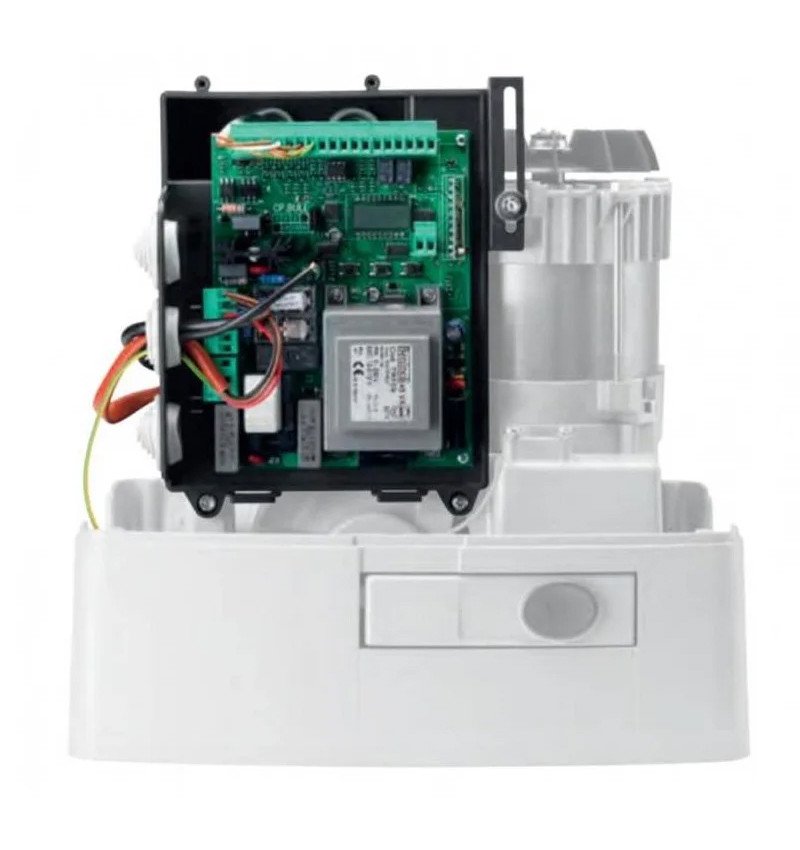
Maneuvering EMFA ComEC 20 He for 230V sliding engine

211147
€265.00
VAT excluded
320,65 €
Tax incl.
Electronic box of replacement maneuvers for industrial sliding engine EMFA Comec 20 He. This central one allows you to manage a single-phase 230 V AC motor and replace the original automation frame when it has a fault or malfunction.

We ship your order within 24/72 hours

Secure payment: Card, Bank transfer, Bizum

Fast shipping from Spain Except bulky
Electronic box of replacement maneuvers for industrial sliding engine EMFA Comec 20 He. This central one allows you to manage a single-phase 230 V AC motor and replace the original automation frame when it has a fault or malfunction.
Has digital Display and Programming Pushbuttors to configure the operating of the door, the force of the motor, the slowdown, the automatic closure, the pedestrian opening and the safety devices.
Product intended for repair of existing automatism. Only the electronic maneuver table is supplied. It does not include motor, radio frequency receiver, controls or other accessories.
COMPATIBILITY
| Feature | Information |
| Type of product | Electronic chart of replacement maneuvers |
| Compatible automatism | EMFA Comec 20 He |
| Application | Sliding door |
| Number of engines | 1 single-phase engine |
| Motor tension | 230 V AC |
| Maximum controllable power | 1,000 W |
| Programming | Digital display and push buttons |
| Radio receiver | Not included; Supports compatible plug-in receiving card |
Main functions
- Management of a single-phase engine 230 V BC and up to 1,000 W.
- Programming by incorporated digital display.
- Automatic closure with adjustable time between 1 and 240 seconds.
- Pedestrian opening with configurable partial tour.
- Regulation independent of force during opening and closing.
- Regulation of force during phases of slowdown.
- Adjustable slowdown to get smoothest starts and stops.
- Control of encoder and anti-explaught system.
- Sensibility to the adjustable obstacle during normal speed and slowdown.
- Electronic motor brake adjustable.
- Community function and fast closure.
- Step-by-step operation or by separate opening and closing orders.
- Man's present man mode.
- Preintering function before the movement of the door.
- Configurable input for clock or timer operation.
- Complete opening and closing cycle counter.
- Diagnosis of the status of the entries using the display.
Adjustable parameters
| Parameter | Regulation |
| Automatic closing time | From 1 to 240 seconds |
| Pedestrian opening | Adjustable partial tour |
| Slowdown | Adjustable slowdown space or deactivable function |
| Pair of the engine | Independent regulation in opening and closing |
| Pair | Independent regulation in opening and closing |
| Encoder sensitivity | Adjustable in normal movement and slowdown |
| Service light | Adjustable time between 1 and 240 seconds |
| Motor brake | Adjustable braking force |
Tickets and outputs
| Connection | Description |
| Feed | Network entry at 230 V AC - 50 Hz and ground connection |
| Engine and condenser | 230 V AC single-phase motor output and condenser connection |
| Accessories | 24 V AC output, maximum 500 mA |
| Control controls | Open, close, stepper and pedestrian opening entries |
| Stop | Stop input using normally closed contact |
| Photocells | Photo O and Photo C tickets, with configurable behavior |
| Photo test | Departure to check the correct functioning of the photocells before the maneuver |
| Safety band | Entrance for resistive band or mechanical band |
| Race | Tickets for opening and closing race end |
| Signaling | Configurable output for open door indicator or service light |
| Flashing | 230 V AC output, maximum 40 W |
| Radio | Connector for plug-in receiver and antenna connection |
Important before placing the order
This product is an electronic replacement and must be installed and programmed by qualified personnel. Before buying it, we recommend check the exact automation model and visually compare the plate, connectors and the version of the installed box, since there may be different electronic revisions.
Normally closed safety entries that are not used must remain correctly bridged according to the manufacturer's scheme. The regulation of force, encoder and anti-explaught devices must be carried out respecting the applicable safety regulations.
Tap to zoom